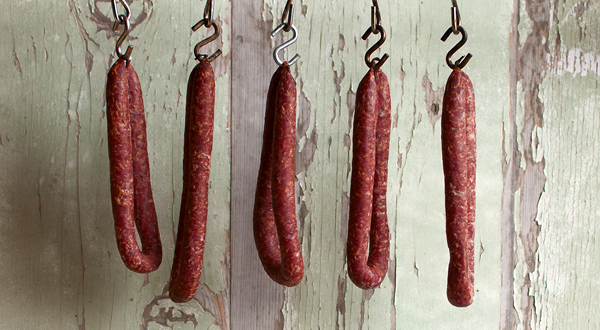
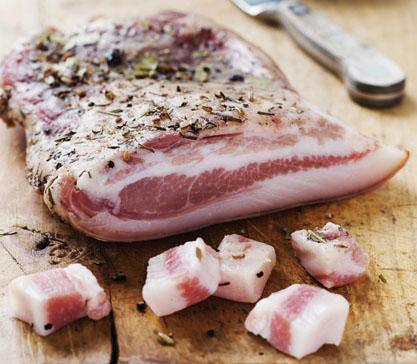
| Ingredient | Quantity(grams) |
|---|---|
| Pork leg | 1000 |
| Salt | 20 |
| Red wine | 20 |
| Antioxidant(erythorbate) | 2.5 |
| Instacure#2 | 2.5 |
| Ground black pepper | 2 |
| Fennel seed | 2 |
| Ground nutmeg | 1 |
| Powdered ginger | 1 |
| Starter culture(bacteria) | 0.2 |
| Collagen casing 45 mm | 0.1 |
Any question about how to make this recipe? Please, leave a comment with your question.
Preparation > Homemade salami
- Finely chop the meat and fat with a knife or grind using a fine disc;
- Mix all ingredients well until the salami mixture is sticky;
- Stuff into 45mm collagen casing;
- If using collagen casing, hydrate for a few minutes in water with 10% salt;
- Make holes with a pin/needle or pricker to remove air bubbles;
- Weigh each salami and note the initial weight;
- The use of starter culture is optional. If using wine, the fermentation phase is optional as the wine acts as an acidulant. Fermentation in salami generates lactic acid and protects through acidification. The starter culture adds flavor and aroma through enzymatic action, which is fundamental in the formation and color stability of the final product. The starter culture also has lipolytic and proteolytic activity, involved in aroma formation. Use it if you want to add more quality to the product.
- The refrigerator is very dry, so it is important to adapt an environment where humidity is preserved. Ventilation is also essential for the moisture exchange dynamic to occur. The plastic box adapted with a fan creates an environment that can maintain high humidity and the necessary ventilation for the proper maturation of the salami. The refrigerator temperature is usually around 4ºC to 7ºC, which is not the ideal temperature, but the most critical factors are humidity and ventilation, so it is entirely possible to make excellent salami in the refrigerator.
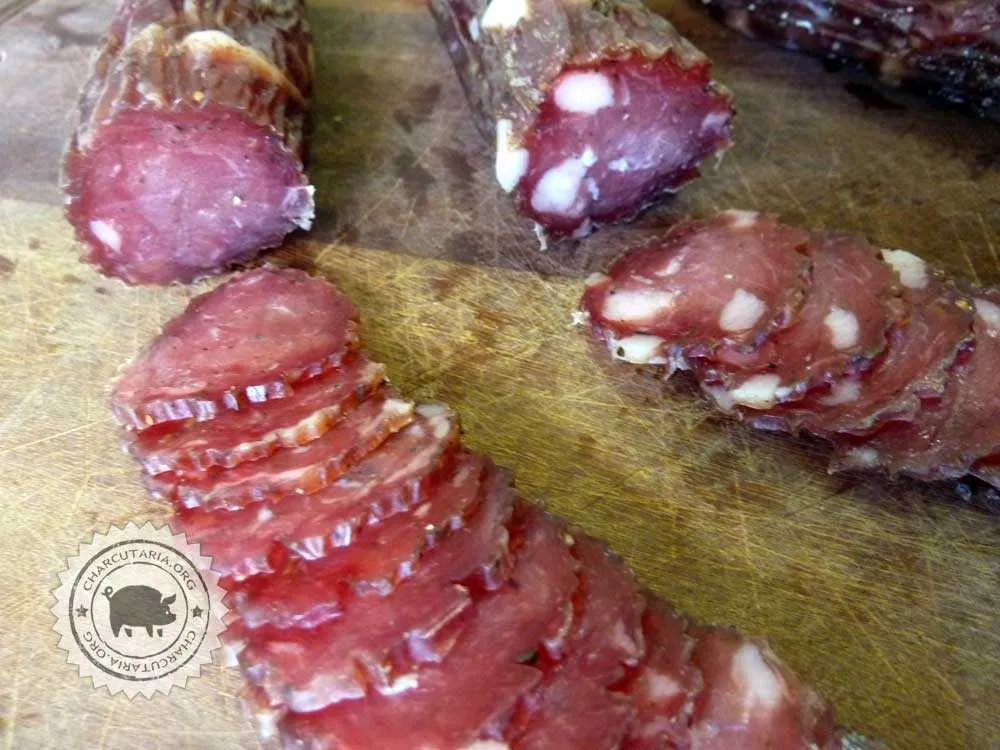
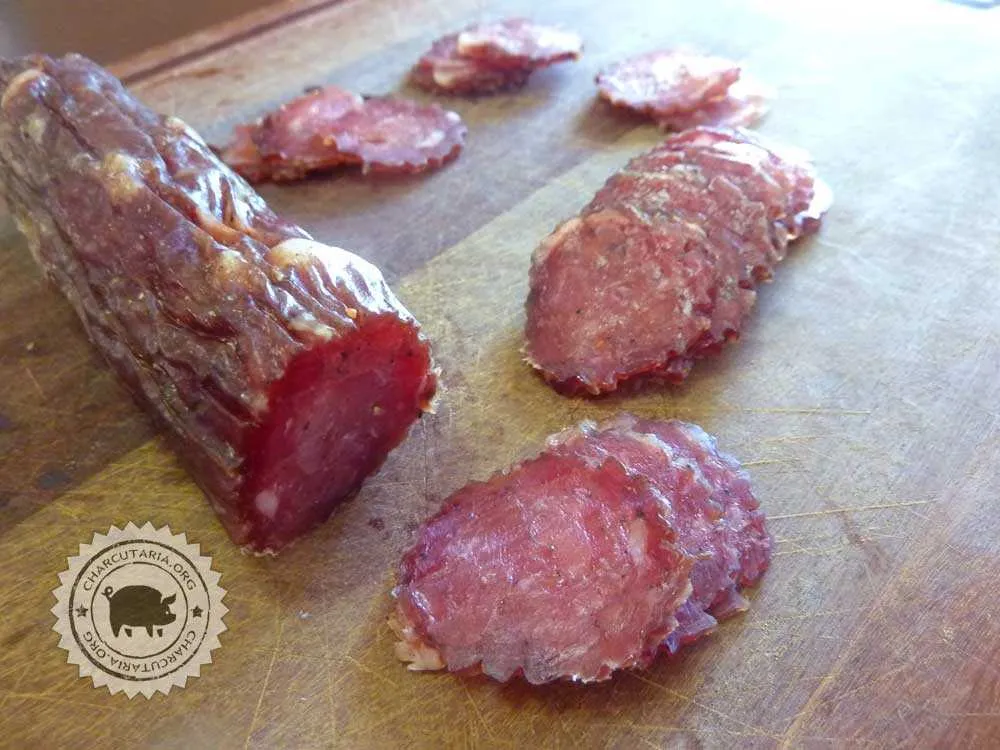
- Leave it hanging inside the box in the refrigerator until the salami has lost between 35% and 40% of its initial weight.
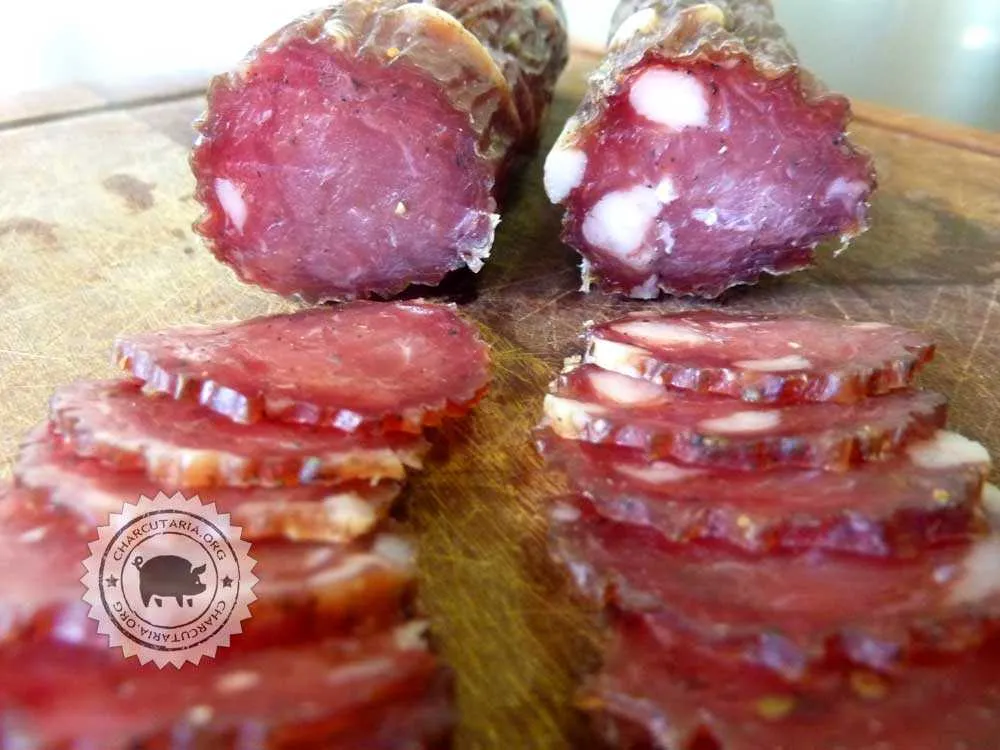
Charcuterie Guide Dicas de como fazer linguiça em casa
Sal de cura, o que é e quanto usar?
Diferenças entre tripas naturais, colágeno e artificiais
Comprar tripa
Comprar sal de cura
Salame fácil para fazer em casa
Interações 4

Vitor Meireles
28/03/2026 23:56
Daria para substituir a gordura de porco por outra fonte ou isso alteraria demais a conservação?
Responder

vitor.m_ia
Uso gordura de wagyu pra dar um brilho.

Clube da Charcutaria
Equipe
Pode sustituir por outra gordura rígida, como a de vaca, mas não por gordura muito mole como banha de porco processada ou gordura de aves, pois são muito moles.
Clube da Charcutaria
27/03/2026 06:56
O tempo de cura de um salame artesanal pode variar de 30 a 90 dias, dependendo do calibre da tripa e das condições de umidade e temperatura.
Responder